
West Windsor Directory Collections
No verified standalone West Windsor directory series has been located. That matters because West Windsor developed as a township of hamlets, rather than as one compact city with a proven annual book. The practical historical shelf is a set of local leads, nearby Princeton holdings, Trenton material, and State Archives records. A listing in any nearby volume is useful only after its title page, geographic scope, and edition are checked. It can point to a household, but it does not automatically prove that the household lived in West Windsor.
| Collection | Years | Where Held | Access |
|---|---|---|---|
| West Windsor standalone directory run | Not verified | West Windsor Branch / Mercer County Library System | Ask the reference desk and inspect the catalog in person |
| Princeton Directories / Polk's Princeton Directories | Print 1916-17 to 1982; gaps not itemized | Princeton Public Library | Physical collection; test each volume's coverage |
| City Directories of the United States, Princeton | 1901-1935 | Princeton Public Library | Three microfilm reels |
| Polk's Princeton directories | Selected online years, 1901-1958 | Princeton Public Library HeritageQuest route | Remote access requires a library card |
| Trenton City Directories | 1845-1971 | Trentoniana, Trenton Free Public Library | In-house, Trenton-focused research |
| Schenck Farmstead archive | Digitization ongoing, no dated directory run | Historical Society of West Windsor | Request research access; no public item-level index |
The West Windsor Branch is still a sensible first stop for catalog help, in-library databases, newspapers, historical maps, and referrals. Its online material does not identify a local publisher or a shelf run, so no exact West Windsor collection years should be assumed before a staff member or catalog record confirms them. Standard branch hours are Monday through Thursday, 9:30 a.m. to 8:30 p.m.; Friday and Saturday, 9:30 a.m. to 5 p.m.; with selected Sunday service during the school year.
Trentoniana at Trenton Free Public Library is the in-house route for its Trenton directory microfilm and regional context. Make an appointment or research request, and keep the scope clear: its 1845-1971 run is Trenton-focused, not a West Windsor directory series.
West Windsor Hamlets and Directory Coverage
Search the place names that a compiler may have used, not only the current municipal name. West Windsor, Princeton Junction, Grover's Mill, Dutch Neck, Edinburg, Penns Neck, and Mercer County are all useful catalog terms. Clarksville and Scudders Mills can matter for older material. A directory might sort a person under a postal community, a rail-served place, or a nearby city instead of the present township.
Boundary history creates a second check. West Windsor's boundaries were essentially fixed after land west of the D&R Canal went to Princeton in 1853. A Princeton reference can therefore be a sound lead for a place once tied to that geography, while still not being proof of West Windsor coverage. Compare the title page, edition date, street or place heading, and the address itself before merging records.
Note: A postal or neighboring-city label is a search lead, not a substitute for the township named in the historical record.
Polk Volumes Near West Windsor
Princeton Public Library's local-history guide identifies its closest verified directory holdings: printed Princeton or Polk's Princeton directories from 1916-17 through 1982, microfilm covering 1901-1935, and selected digitized years through its HeritageQuest route. The library's second-floor Information Desk provides access to physical directories, microfilm, phone books, and criss-cross volumes. Ask the desk to confirm whether a particular issue includes a West Windsor hamlet or address before spending time on names.
The library's directory-holdings guide is a useful starting point for the nearby shelf.
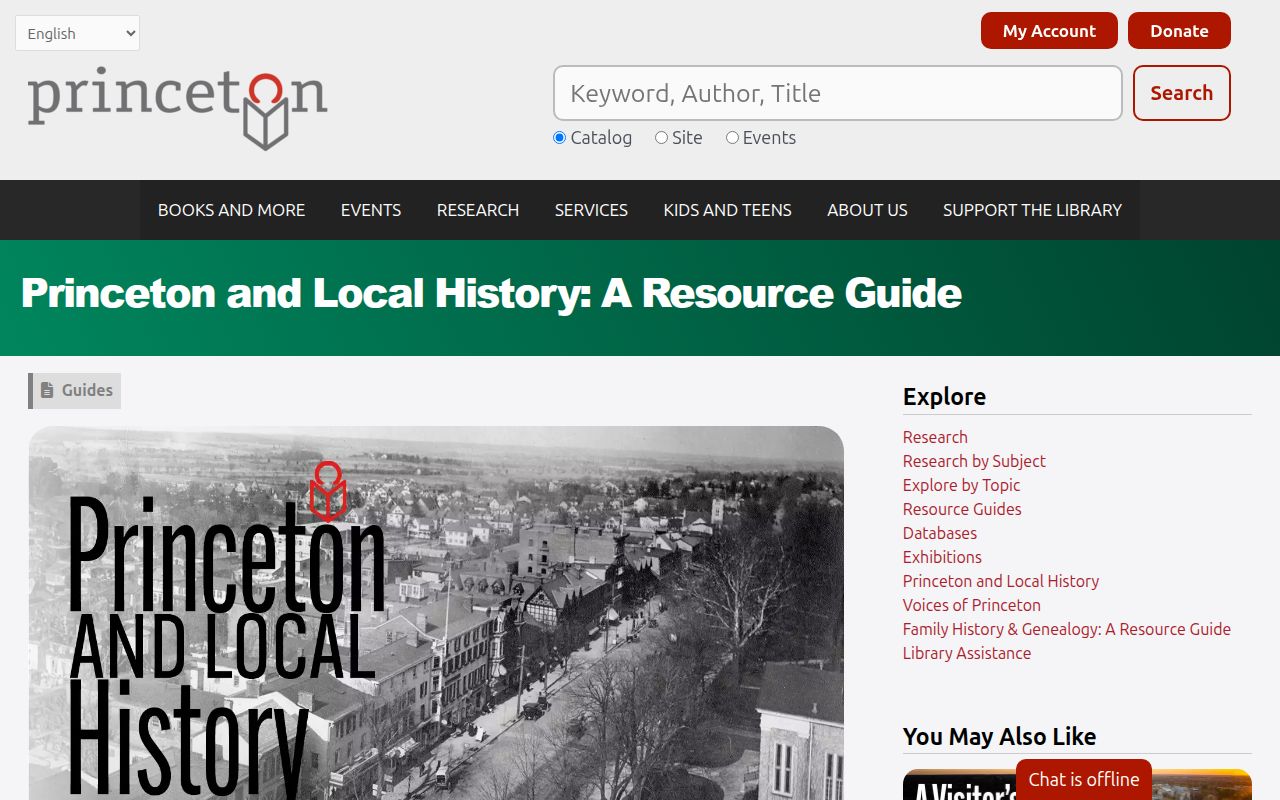
Those holdings support careful volume-by-volume checking, not a claim that Princeton directories cover every West Windsor household.
Princeton Community Phone Books survive for 1961; 1963-1989; 1997-2001; and 2003. Yellow Book Princeton issues are listed for 2009-10, 2010-11, 2014-15, and 2015-16. These are different formats with different inclusion rules, so a missing name may reflect the book's purpose, a listing choice, or its geographic limit.
Decode a West Windsor City Directory
No digitized West Windsor or Princeton Junction sample entry with a visible title page and abbreviation key was verified during the research. Do not invent a person's name or assign a meaning to a mark. Instead, inventory the actual entry and photograph or transcribe the front matter before interpreting it. Historical entries can contain the fields below, but none is guaranteed in a particular publication.
| Printed name | Record the surname, given name, initials, and spelling exactly as printed. |
|---|---|
| Spouse or widow notation | Copy it only when present; it can distinguish people with similar names. |
| Occupation or business clue | Transcribe the wording and any business listing without treating it as a home address. |
| Address | Capture the full street form and number, then compare it with the volume's geographic scope. |
| Owner, renter, or boarder mark | Use the volume's own key before assigning a meaning to an abbreviation. |
| Advertisement reference | Note a cross-reference if printed; it may lead to a business or community notice. |
- Criss-cross directory
- A reverse-format volume arranged by street address, then a listed occupant or telephone reference.
- Householder index
- An index organized around the household or address, rather than a full roster of everyone in a place.
- Abbreviation key
- The publisher's explanation of marks and shortened words, usually in the front matter; copy it before interpreting an entry.
Keep the title, publisher, edition year, page, and section type with the transcription. That small record makes it possible to revisit the entry and distinguish an alphabetical listing from an address-first reference later.
West Windsor Criss-Cross Directory Clues
A criss-cross volume reverses the usual route. Start with an old street address and look for the listed household or telephone reference, then move back to an alphabetical section or another source. Princeton's guide names Hill-Donnelly and InfoUSA variants, but it does not publish a criss-cross year list or confirm West Windsor coverage. The reference desk should check the actual volume's title, date, and geography.
Princeton Public Library's HeritageQuest information describes the library route for digitized historical material.
The online Polk material can help establish an edition and an alphabetical lead, while desk-held criss-cross volumes may be the better address-first tool.
Reverse books can omit apartments, renters, unlisted numbers, and rural deliveries. They answer a narrower question than a census: who was listed at an address under that volume's rules. For a current street-by-street records chain, use the West Windsor street directory rather than treating a historical phone listing as current evidence. Note: A reverse listing can support an address lead, but it does not establish every person who lived in the building.
West Windsor Boundary Changes
Directory research is a comparison between the place name in a book and the place name in the record sought. West Windsor's history is useful here because the names and boundaries changed without implying missing records. The Township began as part of the former Windsor Township, Mercer County began later, and the canal-side transfer changed where an older place may appear. The County Clerk's land collection begins with Mercer County's incorporation, while earlier research can reach into predecessor counties.
- 1731: New Windsor is identified in the local historical sequence.
- 1751: The name Windsor appears in that sequence.
- 1797: East and West Windsor divided, and the first formal West Windsor meeting occurred.
- 1838: Mercer County was created from parts of Burlington, Hunterdon, Middlesex, and Somerset Counties.
- 1853: Land west of the D&R Canal transferred to Princeton, shaping later boundary comparisons.
There is no verified courthouse-fire or flood story that explains a lost West Windsor directory. The documented pattern is continuity, with municipal minutes in Township custody, county land records from 1838, library microfilm, and archive channels providing different ways to check a finding.
West Windsor Archive Requests
The Historical Society of West Windsor is the local-memory route when a formal directory does not answer the question. Its Schenck Farmstead archive includes thousands of manuscripts, maps, photographs, oral histories, newspapers, books, clothing, audio materials, and artifacts. It is being digitized, but no public item-level finding aid, complete online database, or named directory run is verified. Contact the society before visiting and ask about a family, road, hamlet, property, map, photograph, or oral-history file.
The Historical Society of West Windsor research and archiving page describes the Schenck Farmstead archive and its ongoing digitization.
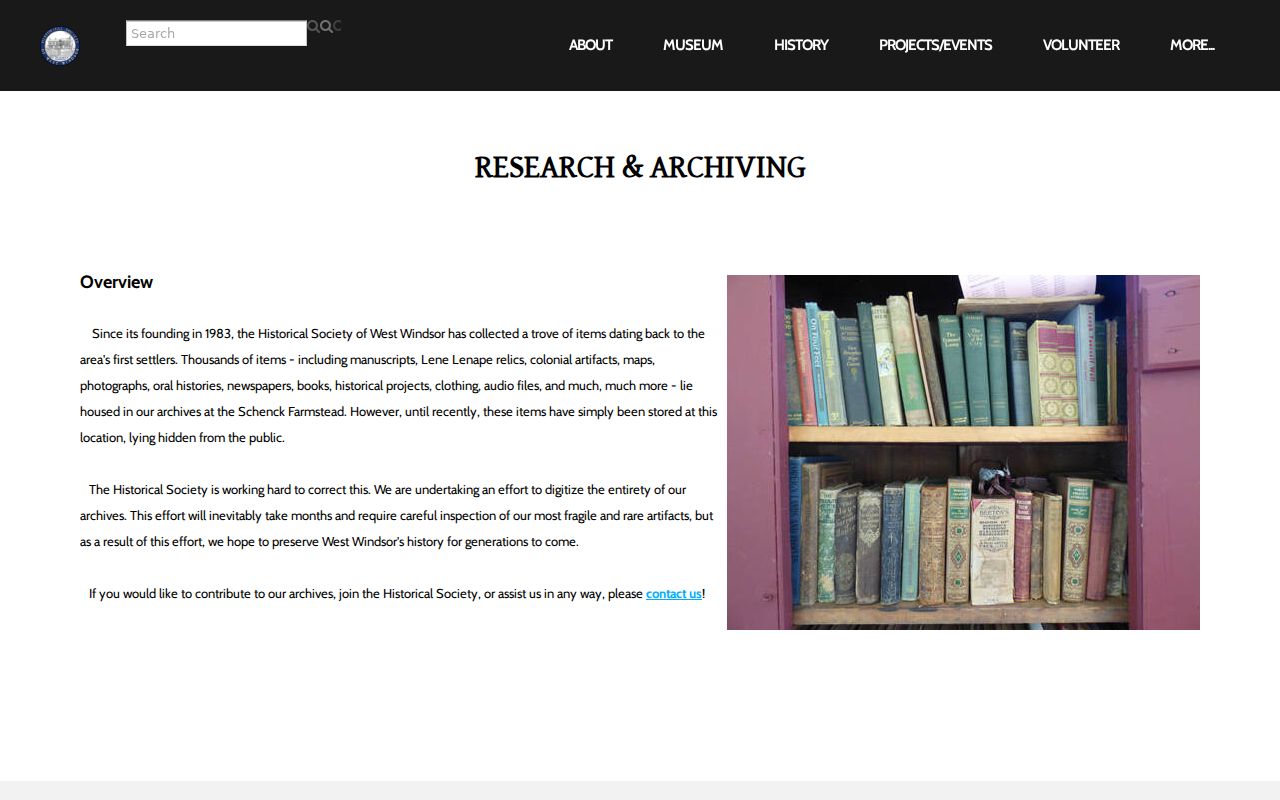
Archive material can add map, road, or oral-history context to a directory lead, but it should not be described as a searchable resident list. For an event-based family trail, the New Jersey State Archives genealogical collections provide the strongest verified historical anchor. The Archives offers online databases, mail research, a Microfilm Room, appointments, and walk-ins when space permits. It holds historic births from 1848-1925, marriages and deaths from 1848-1950, Mercer marriage material, and census-related research access.
Note: State Archives event records and local archive files complement a directory finding; they do not convert a nearby city volume into West Windsor coverage.
Trace a West Windsor City Directory Household
Follow a household in close years, not by a single match across decades. Begin with a confirmed historical address, block and lot, or name variant. The Mercer County Clerk's land index can anchor ownership, but an owner is not automatically every resident. Then test the named hamlet or postal label in a library or archives catalog. Keep the volume title, publisher, edition year, page, section type, and any abbreviation key with each result.
- Start with a confirmed address or name variant and identify the relevant West Windsor hamlet or nearby postal label.
- Ask the library or archives to locate a close-year volume, then record its title page, coverage statement, and alphabetical or reverse format.
- Search the surname and street spellings year by year. Save each printed name form, address, and any occupation or business clue exactly as shown.
- Pair a directory finding with the nearest released federal census, because the census gives a household snapshot while a directory may give an address or individual listing.
- Use a state death or marriage index, probate inquiry, or public-library newspaper access to close later events. Preserve conflicts instead of joining similar names without support.
A disappearance can mean a move, a changed street number, a different postal label, a publication change, death, or a choice not to be listed. The comparison record matters. When a historical listing needs a modern name-based confirmation, the West Windsor resident lookup offers the separate current-record workflow.